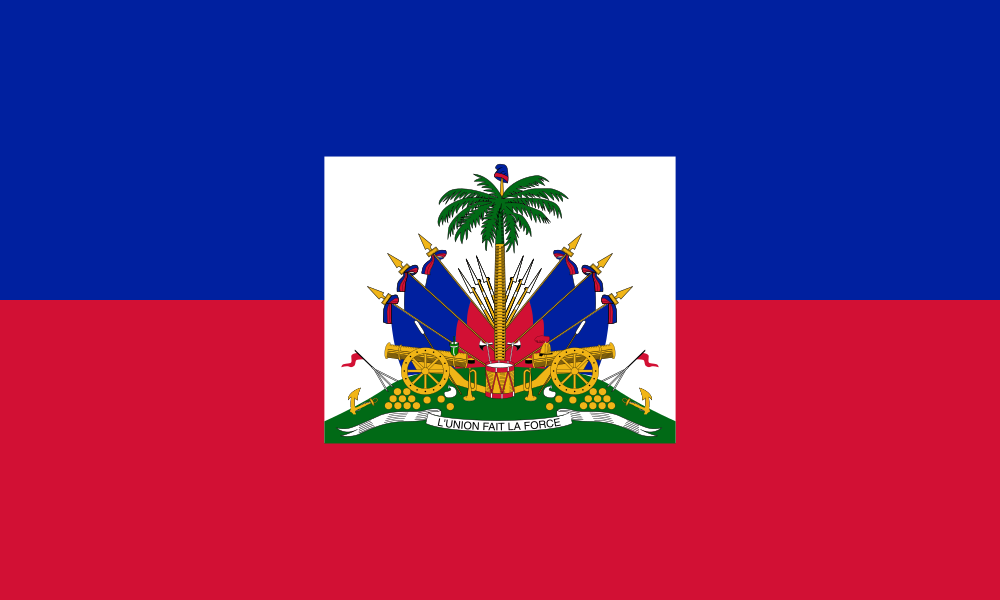
On June 25, 2026, the U.S. Supreme Court allowed the government to end Temporary Protected Status (TPS) for Haiti. You still have rights. This page explains the situation in plain language and the concrete steps to protect yourself and your family.
Nan dat 25 jen 2026, Tribinal Siprèm Etazini bay gouvènman an dwa pou l mete fen nan Estati Pwoteksyon Tanporè (TPS) pou Ayiti. Ou toujou gen dwa. Paj sa a esplike sitiyasyon an an lang senp, ak etap konkrè pou pwoteje tèt ou ak fanmi w.
Last updated August 6, 2026 (on August 5, 2026, the federal judge who had paused the termination confirmed her order is no longer in effect, so no court order is blocking it; USCIS had already confirmed the termination on July 29, 2026). Dates and rules are changing fast — always confirm on the official USCIS Haiti TPS page. Dènye mizajou 6 out 2026 (nan dat 5 out 2026, jij federal ki te sispann fen an konfime lòd li a pa an vigè ankò, kidonk pa gen okenn lòd tribinal k ap bloke l; USCIS te deja konfime fen an nan dat 29 jiyè 2026). Dat ak règ yo ap chanje vit — toujou verifye sou paj ofisyèl USCIS pou TPS Ayiti a.

A federal court has now confirmed there is no court order left blocking the termination. The court-ordered extension expired at 11:59 p.m. on July 27, 2026, and USCIS confirmed the TPS designation for Haiti is terminated in an official release dated July 29, 2026. On August 5, 2026, U.S. District Judge Ana Reyes confirmed that the court order which had been pausing the termination is no longer in effect, following the Supreme Court's ruling. Work permits (EAD, Form I-766) in category A12 or C19 remain not valid. This is still moving fast — always confirm the current status on USCIS before acting.
Yon tribinal federal kounye a konfime pa gen okenn lòd tribinal ki rete pou bloke fen an. Pwolongasyon tribinal la te bay a te ekspire a 11:59 pm nan dat 27 jiyè 2026, epi USCIS konfime desizyon TPS pou Ayiti a fini nan yon anons ofisyèl ki date 29 jiyè 2026. Nan dat 5 out 2026, Jij Distri Ameriken Ana Reyes konfime lòd li te bay pou sispann fen an pa an vigè ankò, apre desizyon Tribinal Siprèm nan. Pèmi travay (EAD, Fòm I-766) nan kategori A12 oswa C19 toujou pa valab. Sitiyasyon an ap chanje vit toujou — toujou verifye estati aktyèl la sou USCIS anvan ou aji.
Important: The exact end dates for protection and work permits can still change as the government issues new notices. Do not rely only on this page for deadlines — check the official USCIS page and talk to a lawyer about your specific situation.
Enpòtan: Dat egzak kote pwoteksyon an ak pèmi travay yo ap fini kapab toujou chanje pandan gouvènman an ap pibliye nouvo avi. Pa konte sèlman sou paj sa a pou dat limit yo — verifye sou paj ofisyèl USCIS la epi pale ak yon avoka sou sitiyasyon pa w.
What happened
Sa ki pase
The court did not say Haiti is safe. It said that courts are not allowed to second-guess the government's decision to end TPS. That removed the legal block that had been keeping the protection alive.
Tribinal la pa di Ayiti an sekirite. Li di tribinal yo pa gen dwa remèt an kesyon desizyon gouvènman an pou l mete fen nan TPS. Sa retire baryè legal ki te kenbe pwoteksyon an an vi.
On June 25, 2026, in a 6–3 decision (Mullin v. Doe), the U.S. Supreme Court ruled that the immigration law does not allow courts to review the Secretary of Homeland Security's decision to terminate a TPS designation. Lower courts had previously paused (blocked) the termination of TPS for Haiti and Syria; this ruling lifted those blocks.
Nan dat 25 jen 2026, nan yon desizyon 6 kont 3 (Mullin v. Doe), Tribinal Siprèm Etazini deside lwa imigrasyon an pa pèmèt tribinal yo revize desizyon Sekretè Sekirite Enteryè a pou l mete fen nan yon deziyasyon TPS. Anvan sa, tribinal pi ba yo te kanpe (bloke) fen TPS pou Ayiti ak Siri; desizyon sa a leve blokaj sa yo.
DHS had published a notice on November 28, 2025 ending Haiti's TPS designation, which affects roughly 350,000 Haitians. With the court block gone, that termination can now move forward. Lawyers may still raise other claims (such as constitutional ones) in the lower courts, but the protection itself is no longer guaranteed.
DHS te pibliye yon avi nan dat 28 novanm 2025 ki mete fen nan deziyasyon TPS Ayiti a, sa ki afekte anviwon 350,000 Ayisyen. Kounye a blokaj tribinal la disparèt, fen sa a kapab kontinye. Avoka yo ka toujou prezante lòt agiman (tankou agiman konstitisyonèl) nan tribinal pi ba yo, men pwoteksyon an li menm pa garanti ankò.
What it means right now
Sa sa vle di kounye a
These are the key dates as of August 5, 2026. They can change — always confirm on the official USCIS page before acting on a deadline.
Men dat enpòtan yo jan yo ye nan dat 5 out 2026. Yo ka chanje — toujou verifye sou paj ofisyèl USCIS la anvan ou aji sou yon dat limit.
As of August 5, 2026: TPS for Haiti is terminated — USCIS confirmed this on July 29, 2026, and a federal court confirmed on August 5, 2026 that no court order is left blocking it — and work permits (EADs) in category A12 or C19 are no longer valid — check the current status on USCIS immediately, as details can still change. When TPS ends, the work permit you got through TPS is no longer valid. Working without separate, valid work authorization can create problems for you and your employer. Ask a lawyer whether you qualify for work authorization through another path (for example, a pending asylum case or a family petition).
Dapre dat 5 out 2026: TPS pou Ayiti fini — USCIS te konfime sa nan dat 29 jiyè 2026, epi yon tribinal federal konfime nan dat 5 out 2026 pa gen okenn lòd tribinal ki rete pou bloke l — e pèmi travay (EAD) nan kategori A12 oswa C19 pa valab ankò — verifye estati aktyèl la sou USCIS touswit, paske detay yo ka toujou chanje. Lè TPS fini, pèmi travay ou te jwenn gras a TPS la pa valab ankò. Travay san yon otorizasyon travay valab ki separe ka kreye pwoblèm pou ou ak pou patwon w. Mande yon avoka si ou kalifye pou otorizasyon travay atravè yon lòt chemen (pa egzanp, yon dosye azil k ap annatant oswa yon petisyon fanmi).
What happens next
Sa k ap pase apre
Losing TPS does not mean instant deportation. There is a legal process, and at several points you have the chance to ask to stay. Here is the usual path.
Pèdi TPS pa vle di depòtasyon imedyat. Gen yon pwosesis legal, epi nan plizyè moman ou gen chans pou mande pou w rete. Men chemen abityèl la.
If you held TPS and are placed in proceedings, you have full due-process rights — you are not subject to "expedited removal" (fast deportation without a judge). You have the right to see a judge, to have a lawyer, and to ask to stay. Do not let anyone rush or scare you into signing away that right.
Si ou te gen TPS epi yo mete w nan pwosedi, ou gen tout dwa pou yon pwosè jis (due process) — ou pa sijè a "depòtasyon rapid" (expedited removal — depòtasyon san yon jij). Ou gen dwa pou wè yon jij, pou gen yon avoka, epi pou mande pou w rete. Pa kite pèsòn prese w ni fè w pè pou w siyen pou bay dwa sa a.
The government confirms that TPS is terminated for Haitians (and Syrians). Protection from deportation under TPS ends on the date the government sets.
Gouvènman an konfime ke TPS fini pou Ayisyen (ak Siryen). Pwoteksyon kont depòtasyon anba TPS la fini nan dat gouvènman an fikse a.
This is the document that officially starts removal (deportation) proceedings in immigration court. It lists your A-number, the allegations, and orders you to appear before a judge. It is most likely to affect people who have no other immigration status — for example, those who stayed past an authorized period without filing for something else.
Sa se dokiman ki ofisyèlman kòmanse pwosedi depòtasyon (removal proceedings) nan tribinal imigrasyon. Li bay nimewo A ou (A-number), akizasyon yo, epi li mande w pou w konparèt devan yon jij. Li gen plis chans afekte moun ki pa gen okenn lòt estati imigrasyon — pa egzanp, moun ki rete depase peryòd otorize a san yo pa t depoze pou yon lòt bagay.
First comes a short Master Calendar Hearing (a check-in where the judge confirms your information and you say what relief you will ask for). Later comes an Individual Hearing (your real "trial," where you present your case). This is your opportunity to ask for another form of relief to stay in the U.S.
Premye, gen yon Odyans Master Calendar ki kout (yon odyans preliminè kote jij la konfime enfòmasyon w epi ou di ki sekou (relief) ou pral mande). Apre sa, vin gen yon Odyans Endividyèl (vrè "pwosè" ou a, kote ou prezante dosye w). Sa se opòtinite w pou mande yon lòt fòm sekou pou w rete Ozetazini.
Some cases that were closed administratively (paused and taken off the court's active list) are being put back on the docket — for example, cases of people who entered at the border whose cases were paused. If your old case is re-calendared, you are back in active proceedings and should get a lawyer right away.
Gen kèk dosye ki te fèmen administrativman (administrative closure — kanpe epi retire sou lis aktif tribinal la) y ap remete yo sou pwogram nan — pa egzanp, dosye moun ki te antre nan fwontyè a epi ki te kanpe. Si ansyen dosye w la remete sou kalandriye a, ou retounen nan pwosedi aktif epi ou dwe jwenn yon avoka touswit.
If you already have an application pending — such as a family petition (I-130), an asylum case (I-589), or a green-card application (I-485) — that can be a defense in court. Your lawyer may ask the judge for more time (an adjournment), to dismiss the case, or to decide your application. If your green-card (adjustment) case is pending, the court will often administratively close your case (pause it) — unless you are treated as an "arriving alien." This is exactly why getting screened for asylum, a family-based petition, or a humanitarian option (U-visa, VAWA, T-visa) early matters.
Si ou deja gen yon aplikasyon k ap annatant — tankou yon petisyon fanmi (I-130), yon dosye azil (I-589), oswa yon aplikasyon green card (I-485) — sa ka sèvi w kòm yon defans nan tribinal. Avoka w ka mande jij la plis tan (yon ajounman), pou anile dosye a (yon "dismissal"), oswa pou deside sou aplikasyon w. Si dosye green card (ajisteman estati) ou a ap annatant, tribinal la souvan ap fèmen dosye w administrativman (kanpe l) — sof si yo trete w kòm yon "arriving alien" (yon moun ki fèk rive nan pò d antre a). Se egzakteman pou sa li enpòtan anpil pou ou fè evalye (screening) dosye w bonè pou azil, yon petisyon fanmi, oswa yon opsyon imanitè (viza U, VAWA, viza T).
What you can do now
Sa ou kapab fè kounye a
You have rights in the United States no matter your status. Taking these steps now puts you in a stronger position.
Ou gen dwa Ozetazini kèlkeswa estati w. Pran etap sa yo kounye a mete w nan yon pi bon pozisyon.
Knowing your hearing dates is critical — missing one can lead to a removal order issued without you. You can check your own case using your A-number (the number that starts with "A" on your immigration mail).
Konnen dat odyans ou yo enpòtan anpil — rate yonn ka mennen yon lòd depòtasyon yo bay san ou pa la. Ou ka tcheke pwòp dosye w ak nimewo A (A-number) ou (nimewo ki kòmanse ak "A" sou lèt imigrasyon w yo).
If the court mails a hearing notice to an old address and you miss the hearing, a judge can order you deported without you there. There is fear about giving an address — but updating it protects you, and you have rights regardless. There are two different agencies, and you may need to update both:
Si tribinal la voye yon avi odyans nan yon ansyen adrès epi ou rate odyans lan, yon jij ka bay lòd pou depòte w san ou pa la. Gen laperèz sou bay yon adrès — men mete l ajou pwoteje w, epi ou gen dwa kèlkeswa sa. Gen de ajans diferan, epi ou ka bezwen mete tou de ajou:
A lawyer can monitor your case in the court system and advise on the best path for you. You do not have to pay a lot — there are free and low-cost nonprofit options. Only two kinds of people can represent you: a licensed attorney, or a DOJ-accredited representative at a recognized nonprofit.
Yon avoka ka swiv dosye w nan sistèm tribinal la epi konseye w sou pi bon chemen pou ou. Ou pa oblije peye anpil — gen opsyon gratis ak pa chè nan òganizasyon san bi likratif. Se sèlman de kalite moun ki ka reprezante w: yon avoka ki gen lisans, oswa yon reprezantan akredite pa DOJ nan yon òganizasyon rekonèt.
You have these rights no matter your immigration status:
Ou gen dwa sa yo kèlkeswa estati imigrasyon w:
Keep copies (on paper and in a secure phone/cloud folder, shared with someone you trust):
Kenbe kopi (sou papye epi nan yon dosye telefòn/nwaj ki sekirize, pataje ak yon moun ou fè konfyans):
Make a family plan in case you are detained:
Fè yon plan pou fanmi w nan ka yo ta mete w an detansyon:
Take action
Aji
Calls from constituents are one of the most effective ways to be heard. Choose your state to find your two senators and their direct phone numbers. It takes about two minutes.
Apèl ki soti nan men abitan yo se youn nan fason ki pi efikas pou fè vwa w tande. Chwazi eta w pou jwenn de senatè ou yo ak nimewo telefòn yo. Li pran anviwon de minit.
Pick your state to see your senators and their phone numbers.Chwazi eta w pou wè senatè ou yo ak nimewo telefòn yo.
Want to reach your U.S. Representative too? Find your Representative and call them with the same message.
Ou vle kontakte Reprezantan ou nan Chanm nan tou? Jwenn Reprezantan ou epi rele l ak menm mesaj la.
Ways to ask to stay
Fason pou mande pou w rete
In front of a judge, you can apply for relief to stay in the U.S. Each has strict rules and deadlines, and eligibility depends on your specific history. This is a simplified overview — not advice on your case.
Devan yon jij, ou ka aplike pou sekou (relief) pou w rete Ozetazini. Chak gen règ ak dat limit ki strik, epi kalifikasyon depann de istwa espesifik ou. Sa se yon rezime senp — se pa konsèy sou dosye w.
| Relief | Sekou (relief) | Who it may help | Kiyès li ka ede | Form |
|---|---|---|---|---|
| Asylum | Fear of persecution at home (race, religion, nationality, politics, or social group). Usually must file within 1 year of entry. | Laperèz pou yo pèsekite w lakay ou (akoz ras, relijyon, nasyonalite, opinyon politik, oswa gwoup sosyal). Anjeneral, ou dwe depoze nan 1 an apre ou antre. | I-589 | |
| Withholding of removal | Kanpe sou depòtasyon (withholding of removal) | Higher proof than asylum, but no 1-year deadline. Stops deportation to your country (no green card). | Mande plis prèv pase azil, men pa gen dat limit 1 an. Li kanpe depòtasyon nan peyi w (men li pa bay green card). | I-589 |
| Protection under the Convention Against Torture (CAT) | Pwoteksyon anba Konvansyon Kont Tòti (Convention Against Torture, CAT) | If you would likely be tortured if returned. Available even if barred from asylum. | Si ou ta gen chans pou yo tòtire w si w retounen. Disponib menm si yo bare w pou azil. | I-589 |
| Cancellation of removal (non-LPR) | Anilasyon depòtasyon — cancellation of removal (non-LPR) | 10+ years here, good moral character, and "exceptional and extremely unusual hardship" to a U.S.-citizen/resident spouse, parent, or child. | 10 an + isit, bon karaktè moral, ak "difikilte eksepsyonèl epi ekstrèmman estraòdinè" pou yon mari/madanm, paran, oswa pitit ki sitwayen/rezidan ameriken. | EOIR-42B |
| Adjustment of status (family) | Ajisteman estati — adjustment of status (fanmi) | Have a qualifying petition (often through a U.S.-citizen spouse or family) and are admissible. | Ou gen yon petisyon ki kalifye (souvan atravè yon mari/madanm oswa fanmi ki sitwayen ameriken) epi ou admisib. | I-485 |
| U-visa / T-visa / VAWA | Viza U / Viza T / VAWA | Victims of certain crimes, of human trafficking, or of abuse by a U.S.-citizen/resident family member. | Viktim sèten krim, viktim trafik moun, oswa viktim abi yon manm fanmi ki sitwayen/rezidan ameriken fè. | I-918 / I-914 / I-360 |
A prior removal order or certain criminal history can block some of these — but withholding and CAT protection may still be available. Only a lawyer can tell you what fits your case. Yon ansyen lòd depòtasyon oswa sèten istwa kriminèl ka bloke kèk nan sa yo — men kanpe sou depòtasyon (withholding) ak pwoteksyon CAT ka toujou disponib. Se sèlman yon avoka ki ka di w sa ki bon pou dosye w.
In times like these, scammers target families in fear. A "notario" or "immigration consultant" is not a lawyer in the U.S. and usually cannot represent you in court. Watch for these red flags:
Nan moman tankou sa a, èskwo yo vize fanmi ki nan laperèz. Yon "notario" oswa "konsiltan imigrasyon" pa yon avoka Ozetazini epi anjeneral li pa ka reprezante w nan tribinal. Veye siy danje sa yo:
Verify before you pay: check an attorney with your state bar, or confirm an accredited representative on the official EOIR list. USCIS is the only authority on your case status and the real dates.
Verifye anvan ou peye: tcheke yon avoka ak bawo eta w la (state bar), oswa konfime yon reprezantan akredite sou lis ofisyèl EOIR la. USCIS se sèl otorite sou estati dosye w ak sou vrè dat yo.
Trusted help
Èd ou ka fè konfyans
These groups are real, active, and serve the Haitian community. Phone numbers and hours can change — confirm on each website before you visit.
Gwoup sa yo reyèl, aktif, epi yo sèvi kominote ayisyen an. Nimewo telefòn ak orè yo ka chanje — konfime sou chak sitwèb anvan ou ale.
Member-led group of TPS holders leading the court case. News, FAQs, and ways to take action — full site in Haitian Creole.
Gwoup ki dirije pa moun ki gen TPS k ap mennen dosye tribinal la. Nouvèl, kesyon yo poze souvan, ak fason pou aji — sit konplè an Kreyòl.
Legal and social services for the Haitian community, and co-counsel in the TPS litigation. Publishing employer letters and family-prep forms.
Sèvis legal ak sosyal pou kominote ayisyen an, epi ko-avoka nan dosye tribinal TPS la. Y ap pibliye lèt pou patwon ak fòm preparasyon fanmi.
Managing Attorney at The W. Thomas Law Firm, P.C. Shares plain-language updates and guidance on TPS and removal defense — follow on Instagram to stay current.
Avoka Direktè nan The W. Thomas Law Firm, P.C. Li pataje mizajou ak konsèy an lang senp sou TPS ak defans kont depòtasyon — swiv li sou Instagram pou rete ajou.
A task force of immigration attorneys for Haitian TPS cases, Mon–Fri 3–5pm ET.
Yon ekip avoka imigrasyon pou dosye TPS ayisyen yo, Len–Van 3–5pm ET.
Little Haiti–based: immigration services, mental health, advocacy. Serves 10,000+ families a year.
Baze nan Little Haiti: sèvis imigrasyon, sante mantal, defans dwa. Sèvi plis pase 10,000 fanmi pa ane.
Free TPS legal clinics in the NY area and help with renewals and questions.
Klinik legal TPS gratis nan zòn NY epi èd ak renouvèlman ak kesyon.
Free online screening plus a searchable directory of 1,000+ nonprofit legal providers near you, by ZIP code.
Evalyasyon an liy gratis plis yon ànyè ou ka chèche ladan l, ak plis pase 1,000 founisè legal san bi likratif toupre w, pa kòd postal.
Stay updated
Rete enfòme
Because dates and rules keep shifting, check these directly rather than relying on rumors or social media.
Paske dat ak règ yo kontinye chanje, tcheke sa yo dirèkteman olye w konte sou rimè oswa rezo sosyal.